The simple idea behind tennis ball placement
Placing tennis balls around certain garden hazards is a low-cost, low-effort way to reduce accidental injury to birds and hedgehogs. The concept uses bright, soft markers to block or soften access to sharp edges, traps, and narrow gaps where small animals get stuck.
This article explains where to place tennis balls, why it works, and how to do it safely in yards, parks, and community spaces.
Why tennis ball placement helps bird and hedgehog survival rates

Tennis balls are soft, visible, and inexpensive. They cushion sharp corners, cover gaps, and create a visible deterrent that helps wildlife avoid dangerous spots. For hedgehogs, which forage at night, the balls can prevent them from squeezing into tight holes or between fence slats where they become trapped.
For birds, the bright color and round shape can reduce collisions and entanglement at low fences, garden netting edges, and wires. The approach complements other wildlife-friendly measures such as safe netting, hedgehog highways, and bird-safe glass treatments.
Where to use tennis ball placement
- Fence gaps and narrow slats where hedgehogs might get stuck.
- Sharp metal or wooden edges near nesting areas.
- Low garden net edges that trap wings or feet.
- Posts, bollards, or stakes that birds might fly into at dawn or dusk.
Step-by-step guide to safe tennis ball placement
Follow these practical steps to use tennis balls without creating additional hazards. The goal is to reduce risk while keeping the garden tidy and accessible.
Materials needed
- Tennis balls (new or gently used)
- A small utility knife or garden shears
- Zip ties, garden twine, or weatherproof glue
- Gloves and safety glasses
Installation steps
- Inspect the area for specific hazards: look for gaps, sharp edges, or nets where animals get trapped.
- Decide whether to place whole balls, halved balls, or balls with a small slit. Whole balls are best as soft bumpers.
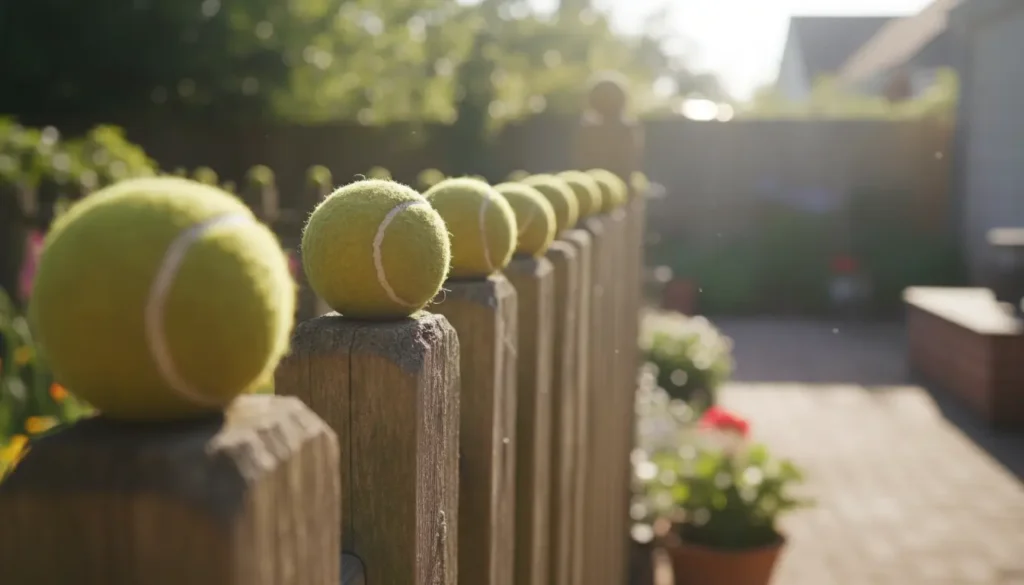
- For fence posts and stakes, push a whole ball over the top or secure it with a zip tie through the ball’s surface. Avoid loose threading that could snag fur.
- For slats and gaps, a halved ball glued to the surface covers sharp points and keeps edges visible.
- Check installations weekly for wear and to remove moldy or chewed balls.
Tennis ball placement tips to avoid problems

Used correctly, tennis balls are helpful. Done poorly, they can become litter or a new entanglement hazard. Use these rules to stay safe.
- Secure balls firmly so they cannot be dragged into vegetation.
- Avoid using strings through the balls that can loop around legs or necks.
- Use non-toxic glue and weatherproof fasteners to reduce replacements.
- Inspect after storms and during seasonal cleanups.
Tennis balls are soft enough to cushion impacts but visible enough to act as deterrents, making them useful for protecting small animals in garden settings.
Examples and common uses of tennis ball placement
Here are practical examples you can try in a typical backyard or community green space.
- Cover the tops of sharp wooden posts with whole tennis balls to prevent hedgehogs from injuring their snouts while exploring at night.
- Attach halved balls along the lower edge of bird netting to reduce the chance of birds catching toes or beaks.
- Place balls on the ends of metal railings or stakes to make them more visible to flying birds at dawn.
Small real-world example: community garden case study

A small urban community garden noticed repeated hedgehog entrapments under an old compost lid and occasional bird wing snags on garden netting. Volunteers began placing whole tennis balls on the compost hinge posts and halved balls along the net edges.
Over several months they recorded fewer rescue incidents and observed hedgehogs crossing the garden more confidently. The group emphasized weekly checks and replacing weathered balls. The change was inexpensive and easy to maintain.
Monitoring and working with local wildlife groups
After installing tennis ball protections, monitor wildlife activity for signs of improvement. Keep a simple log with dates and any incidents observed. That record helps show whether the measure is effective.
If you find injured animals, contact local wildlife rescue or rehabilitation organizations rather than trying to treat them yourself. They can offer rescue, medical care, and further advice on site improvements.
Final checklist before you start tennis ball placement
- Perform a hazard survey in your space.
- Choose sturdy and non-toxic fasteners.
- Install securely to avoid loose pieces.
- Check regularly and replace worn items.
- Coordinate with neighbors or local groups for larger areas.
Tennis ball placement is an accessible conservation action for gardeners and community groups. With careful installation and ongoing checks, it can reduce small-animal injuries and support safer movement for birds and hedgehogs.



