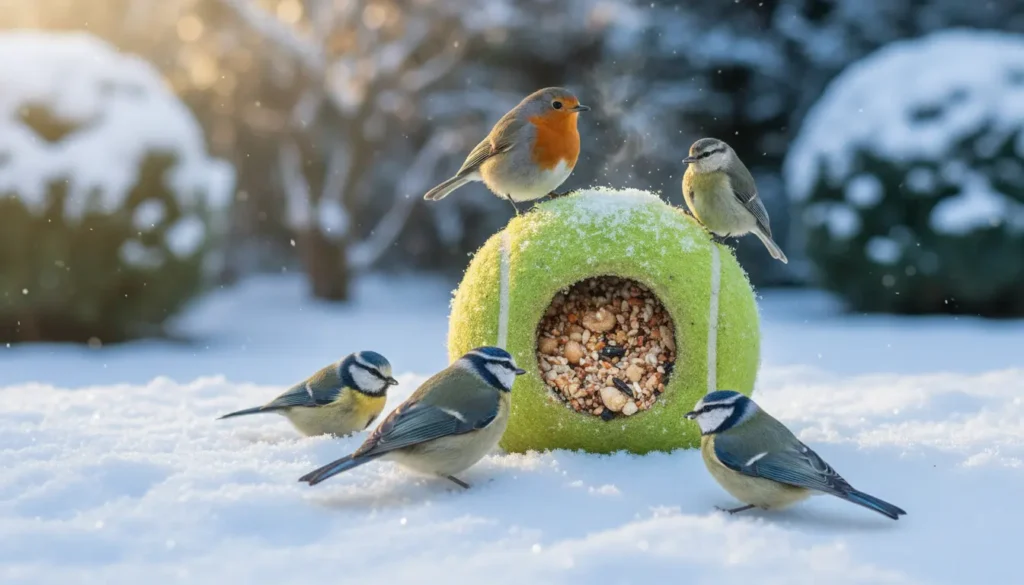
What the tennis ball tip is and why it matters
As temperatures drop, small animals and birds move through gardens looking for food and safe routes. Sharp stakes, exposed wire ends and low-hanging hooks can injure wildlife that visit hedgerows and feeders.
The tennis ball tip is a low-cost, easy fix: reuse old tennis balls to cover sharp or exposed garden hardware and to create simple hanging feeders. This reduces the risk of cuts, snags and cold exposure for hedgehogs, small mammals and birds.
Materials you need for the tennis ball tip

Most of the materials are common household items or things you can buy cheaply. Use non-toxic materials only.
- Old tennis balls (cleaned)
- Sharp knife or box cutter
- Drill with small bit or awl (for hanging)
- Strong twine or garden wire coated in plastic
- Suet, seed mix or lard for bird feeders (optional)
- Gloves and eye protection
Two practical uses of the tennis ball tip for winter wildlife
1. Covering stakes and sharp ends to prevent injuries
Place an intact tennis ball over the top of fence posts, bamboo canes, metal rods or exposed garden spikes. The soft ball creates a blunt, cushioned cap.
How to fit a tennis ball cap:
- Clean the ball and wear gloves. Cut a small ‘X’ or slit on one side using a sharp knife and widen it enough to push the post through.
- Push the post into the slit until the ball sits snugly on the end. If the fit is loose, wrap a strip of tape around the top of the post before inserting the ball.
- For permanent fixtures, drill a small hole through the ball and post and secure with a short nail or coated wire—do not leave loose sharp wire exposed.

This simple cap lowers the chance a hedgehog, bird or small mammal will be cut or impaled while moving at ground level or in shrubs.
2. Making a hanging seed or fat feeder from a tennis ball
Use a halved or hollowed tennis ball as a lightweight feeder for small birds. The soft shell holds fat or seed crumbs and hangs under cover, protected from rain.
Quick steps to make a tennis ball feeder:
- Cut the ball in half or make an opening large enough to scoop in suet or seed mix.
- Fill with suet, lard mixed with seed, or pressed seed cakes.
- Drill two small holes and thread twine through to hang under eaves or inside dense shrubs where birds feel safe from predators.

Hang feeders away from high-traffic areas for cats and squirrels, ideally close to a shrub that birds can fly into for quick cover.
Safety and wildlife-friendly tips
Not all tennis balls or methods are safe. Follow these guidelines to avoid unintended harm.
- Do not use painted or chemically treated balls. Choose old, plain balls and wash them thoroughly.
- Avoid small parts or loose strings that could cause entanglement.
- Do not place feeders where predators can hide nearby. Keep them visible and within quick escape routes for birds.
- Replace suet or food regularly to prevent mould. Check balls for wear and replace if they break down.
- Use natural or plastic-coated twine; metal or wire ends should be covered or bent away from wildlife paths.
Placement ideas to make gardens safer for winter wildlife
Think like an animal when deciding where to put tennis ball caps and feeders. Look for likely routes, feeding spots and common hiding places.
- Cover the ends of stakes near hedges, compost heaps and undergrowth where small mammals travel.
- Hang feeders low and within 1–2 meters of dense shrub cover for quick escape.
- Mark low-level hazards such as guy lines and clotheslines with bright tennis ball covers so birds and bats can see them.
- Use caps on temporary netting poles and greenhouse stakes during the winter months when wildlife is most active.
Small case study: Community garden protects hedgehogs
A community garden in a small town noticed hedgehogs visiting compost piles over winter. Garden volunteers reported minor snags on low garden stakes and decided to try the tennis ball tip.
They fitted about 40 recycled tennis balls to bamboo canes and metal stakes around hedgerows and compost areas. Volunteers also hung a few suet-filled tennis ball feeders low in the shrubbery.
Within two months the garden recorded fewer injured hedgehogs and more regular bird visits to the new feeders. Volunteers credited the low-cost changes and scheduled an annual check of all balls each autumn.
Common questions about the tennis ball tip
Will tennis balls last outdoors?
Tennis balls withstand some weather but will degrade over time. Check them every season and replace when cracked or chewed.
Are there alternatives to tennis balls?
Yes. Rubber caps, purpose-made post protectors and soft plastic covers also work. Tennis balls are popular because they are easy to find and cheap to reuse.
Final checklist before you start
- Choose clean, plain tennis balls and inspect for chemicals or heavy dyes.
- Gather safe tools and wear gloves when cutting.
- Plan placement to avoid predator ambush zones and ensure quick cover for small animals.
- Monitor feeders and caps weekly for wear, food spoilage, and safety issues.
Using a few recycled tennis balls is a simple, practical way to reduce common winter hazards in gardens. The tip is cheap, quick to implement and can make a real difference to small mammals and birds when they need help most.



