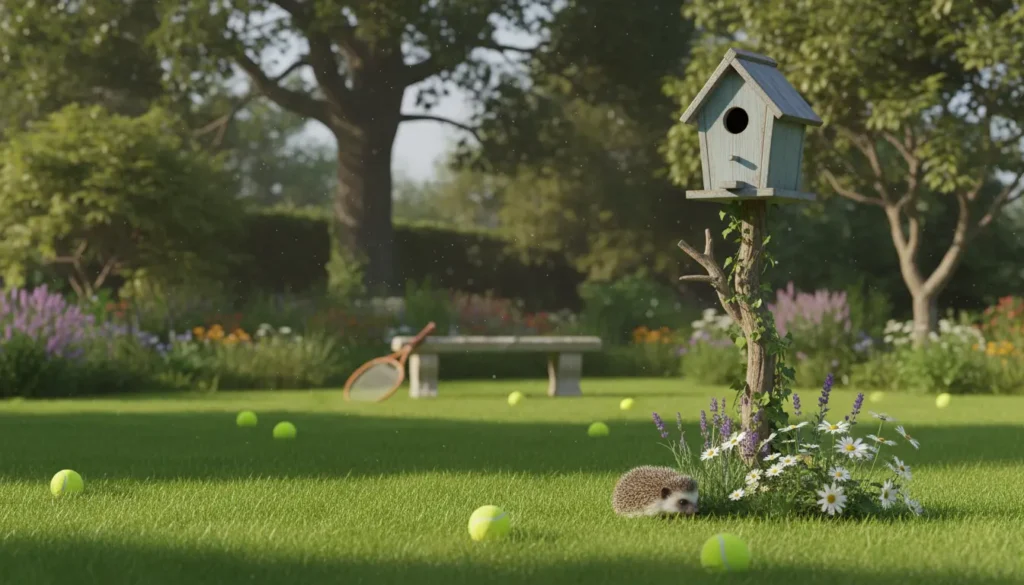
Old tennis balls are common landfill items. With a little care they can be repurposed in simple ways to reduce risks to garden birds and hedgehogs. This article gives practical, safe ideas you can try today.
Why tennis balls matter for garden birds and hedgehogs
Tennis balls are soft, visible and easy to attach. They can cushion sharp edges, mark hazards and reduce accidental entanglement when used correctly.

Wildlife in gardens is vulnerable to sharp posts, exposed netting, and open drains. Small changes using low-cost items like tennis balls can lower injury risks and help animals move safely through your space.
Safe uses of tennis balls in the garden
Use only clean, intact tennis balls for these projects. Avoid using tiny pieces that could be swallowed and do not put balls inside nesting material.
- Cap sharp posts and stakes — Make a simple protective cap by cutting a small slit or cross in the ball and pushing it onto the top of metal or wooden posts. This cushions sharp points and prevents animals from being injured if they bump into them.
- Mark and increase visibility of netting — Tie whole tennis balls to netting lines or stakes at hedgehog height. The bright color and size make netting more visible at night and reduce entanglement risk.
- Protect pond net anchors — Slip cut tennis balls over metal pegs or anchor points that hold pond nets. This reduces sharp edges and makes the anchors easier to spot for hedgehogs and birds.
- Cover unused drain holes temporarily — For short periods, a whole tennis ball pressed into a larger garden drain or pipe opening can prevent small animals falling in. Check often and never make airtight covers; create small breathing holes and remove the cover daily.
- Create visible markers near holes and gaps — Place tennis balls on stakes to show the location of animal entrances or tunnels under fences. This helps people avoid stepping or digging there and alerts mower users to the hole.
Materials and tools you will need
Most projects use only basic tools and household items. Prepare a small kit so you can work safely and cleanly.
- Tennis balls (cleaned and inspected)
- Sharp scissors or a utility knife (use with caution)
- Cable ties, string, or garden wire
- Gloves for handling and cutting
Step-by-step: Making a post cap and a net marker
These two simple DIY projects take minutes and reduce common hazards.
Post cap (for metal or wooden stakes)
- Inspect the ball for wear; discard if the inside is crumbly.
- Using gloves, cut a small slit or X on one end of the ball. The cut should be just large enough to push the post through.
- Push the ball onto the post until it sits snugly. Trim if necessary to fit securely.
- Check periodically for weather damage and replace when worn.
Net marker
- Thread a short length of garden wire or string through a whole ball (poke a pilot hole first if needed).
- Tie the ball to the net line or stake at a height of about 5–15 cm (2–6 inches) above ground to be visible to hedgehogs and low-flying birds.
- Use multiple markers spaced evenly along the net to increase visibility.
Hedgehog populations in parts of Europe have fallen by more than 30% in recent decades. Simple garden changes, like marking netting and covering sharp edges, can make a big local difference.
Safety tips when using tennis balls for wildlife
Tennis balls are durable but not designed for wildlife products. Follow these precautions to avoid harm.
- Never place balls where animals might eat pieces. Cut balls should be used as caps or markers only.
- Check modifications weekly for wear, mold, or loose parts and replace promptly.
- Avoid using balls that have chemical treatment or strong odors; clean them in mild soapy water first.
- Do not block escape routes with balls; always leave a clear path for animals.
When not to use tennis balls

There are situations where tennis balls are not appropriate. They should not be used as nesting material, bedding, or inside feeding containers where fragments could be swallowed.
If you need insulation or nesting support, prefer clean natural materials such as dry grass, shredded paper (no glossy ink), or commercially made wildlife-safe nesting material.
Small case study: A community garden trial
Volunteers in a small community garden noticed hedgehog tracks near the pond and several raised bird feeders close to netting. They added tennis ball post caps to stakes and tied tennis ball markers along net lines.
After three months the volunteers reported fewer visible entanglements and they observed hedgehogs crossing the area more confidently at night. The garden team also cleaned and replaced worn balls after the first wet season.
This is an anecdotal example showing how low-cost, visible fixes can reduce risk. It is not a scientific trial, but it illustrates practical benefits from easy changes.
Summary: Practical, low-cost protections using tennis balls
Repurposing old tennis balls can reduce hazards to garden birds and hedgehogs when used thoughtfully. Focus on visibility and cushioning, avoid creating swallowing risks, and check installations regularly.
With a few clean tennis balls, cable ties and a little time, gardeners can make their spaces safer for wildlife and help local populations thrive.