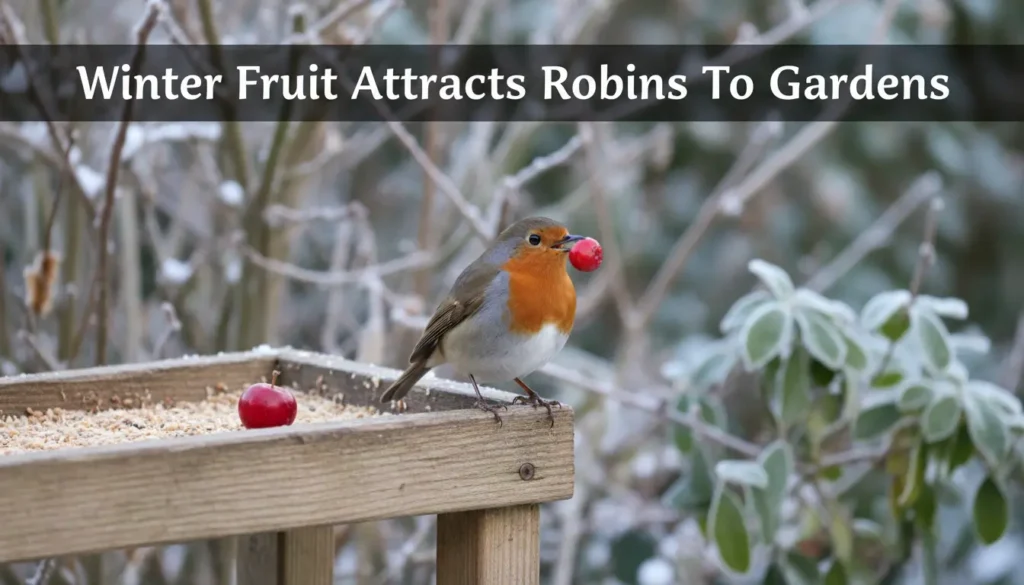
Robins are one of the most welcome winter visitors in home gardens. Bird experts say a predictable, fruit-based offering can make robins return day after day.
How winter fruit tricks attract robins to your garden
Robins switch from insects to fruit as winter food becomes scarce. The winter fruit trick is simply offering easily accessible, high-energy fruit for short periods to encourage repeat visits.

This approach works because fruit provides sugar and water content that helps birds maintain energy and body heat in cold months. The trick is to make the fruit visible, safe, and predictable.
Why robins prefer fruit in winter
Robins have flexible diets and will readily eat berries and soft fruit when insects are scarce. Larger, fleshy fruits and berries are easier to eat and digest in cold weather.
Ornithologists and experienced birders note that robins learn where reliable food sources are and revisit them, which is why a well-placed fruit station can create a long-term pattern.
Best winter fruits for attracting robins

Choose fruits that are safe, non-toxic, and suitable for outdoor placement. Fresh or slightly softened fruit is ideal.
- Small berries: holly berries, juniper, and cotoneaster
- Crabapples: small, firm apples that persist on trees
- Raisins and sultanas: rehydrated slightly with water to soften
- Chopped apples and pears: core removed and cut into small pieces
- Rowan (mountain ash) berries: favoured where available
Avoid fruit with added sugar, syrups, or artificial preservatives. Do not feed citrus if local guidelines advise against it for your species mix.
How to prepare fruit for robins
Prepare fruit in a way that reduces spoilage and predation risks. Cut fruit into bite-sized pieces and place on elevated platforms or shallow dishes.

Soak raisins briefly to make them plump and easier to swallow. Remove cores and large seeds from apples and pears to prevent choking hazards.
Where to place fruit to turn robins into garden addicts
Placement is as important as the fruit itself. Robins prefer open perches with nearby cover so they can feed and retreat quickly if threatened.
- Elevated platforms: place shallow dishes on posts or low tables 1–2 metres off the ground
- Tree branches: hang small clusters of fruit on branches but away from dense cover that hides predators
- Near shrubs: place feeding spots close to shrubs so birds have quick escape routes
Rotate feeding sites occasionally to reduce buildup of droppings and to discourage aggressive birds from monopolizing the spot.
Timing and frequency for feeding in winter
Start offering fruit when temperatures drop and insect availability declines. Early winter is ideal, and continue through late winter when natural fruit supplies are lowest.
Keep feedings regular (same spot, similar times) to establish predictable visits. Short daily offerings work better than continuous piles that attract pests or spoil.
Safety and hygiene when using the winter fruit trick
Hygiene matters for bird health. Clean feeding platforms regularly to limit mold and bacteria that can harm birds.
- Wash containers with hot water weekly
- Remove uneaten fruit after a day or two
- Avoid placing fruit where rodents can access it easily
Be aware of local wildlife regulations. In some regions feeding wild birds year-round may be discouraged, so adjust practices to local guidance.
Robins can learn to recognize safe feeding sites quickly and will return daily if the food is consistent and the site gives quick access to cover.
Case study: Small garden, big results
In a small suburban garden, a gardener began placing chopped crabapples on a low wooden platform in late November. The platform was placed 1.5 metres from a dense hawthorn hedge.
Within a week, two to three robins were visiting every morning. After a month, the gardener recorded daily visits from up to six robins, plus other berry-eating species.
Simple changes that made this work included predictable timing, elevated placement, and keeping the fruit fresh. The result was more bird activity and regular enjoyment for the gardener.
Practical checklist to try the winter fruit trick
- Choose safe fruits: crabapples, raisins, chopped apples
- Prepare fruit: remove large seeds, slightly soften when needed
- Place platform: 1–2 metres off ground, near cover
- Keep it regular: same spot, short daily offerings
- Maintain hygiene: clean dishes weekly, remove old fruit
Following these steps will increase the chance that robins discover and return to your garden. The winter fruit trick is low-cost and low-effort, but it rewards consistent attention.
With proper placement and care, your garden can become a dependable winter feeding station that supports robins and brings wildlife closer for observation.



