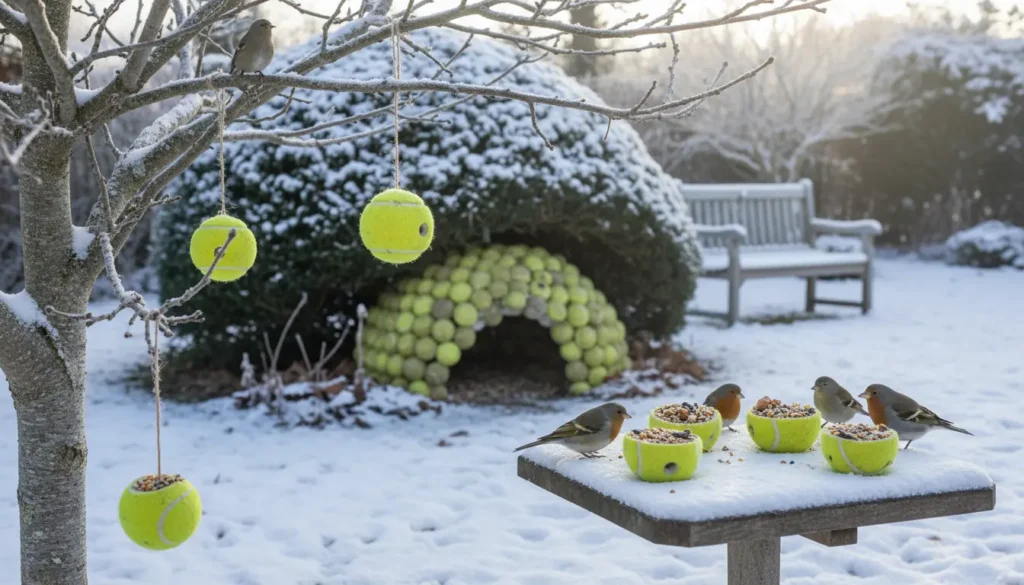
Winter brings food shortages and cold stress for small wildlife. Low-cost tools like tennis balls can help provide food, shelter, and safe resting spots for birds and hedgehogs.
Winter Wildlife SOS: Why tennis balls work for birds and hedgehogs
Tennis balls are lightweight, weather-resistant, and easy to modify. They can act as cushioning, insulation, or a simple platform for food and shelter.

Using tennis balls in small projects is practical for gardens, balconies, and rescue centres because they are cheap and widely available.
How tennis balls help birds in winter
Tennis balls can be used to create simple feeders and perches. The soft surface protects bird feet from ice and frozen branches.
- Cut a tennis ball in half and attach the flat side to a wired platform as a seed cup.
- Thread whole tennis balls on a rod to make a chunky perch near feeders.
- Use tennis balls as non-slip pads under suet or seed trays to keep them steady on slippery surfaces.
How tennis balls help hedgehogs in winter
Hedgehogs need dry, insulated places to hibernate and safe corridors to move at night. Tennis balls can protect bedding, block drafts, and mark safe entrances.
- Cut a tennis ball into two and place the halves around a small hole to reduce chill and create a sheltered entry lip.
- Stuff tennis balls between layers of dry leaves and straw to create an insulated pocket inside a hedgehog house.
- Use tennis balls to pad the base of a temporary hedgehog box to keep the home off a cold, damp surface.
Step-by-step: Make a simple tennis ball bird feeder

Here is a fast, safe feeder that requires very few tools. It works well for sparrows, tits, and finches.
- Gather one or two old tennis balls, a sharp utility knife, strong twine, and a shallow dish or platform.
- Cut a small slot in the ball wide enough to hold seed and let birds access food easily.
- Place the ball on the platform with the cut facing up. Secure the ball with twine but do not seal the opening.
- Fix the platform 1.5–2 meters above ground in a sheltered spot, away from heavy winds and predators.
This feeder is simple to check and refill. The tennis ball’s surface keeps seed dry longer than bare plastic.
Safety tips for using tennis balls with wildlife
Always check materials for hazards. Old balls with loose fibers, toxic dyes, or hard inner cores can harm animals if they ingest fragments.
- Use clean, intact tennis balls. Remove any hard inserts or exposed strings.
- Do not use chemical cleaners on balls intended for wildlife use.
- Place feeders and shelters where cats and other predators cannot hide nearby.
- Regularly inspect and replace damaged balls to avoid choking hazards.
Winter Wildlife SOS: Placement and maintenance tips

Location matters. Place tennis ball feeders and hedgehog shelters in sheltered, dry spots that are easy to access for checking and cleaning.
Maintain items weekly. Remove moldy food, damp bedding, and inspect for pest activity or structural damage.
Best places to set things up
- Near hedges or thick shrubs that offer cover for birds and hedgehogs.
- Away from open lawns where trampling may expose animals to cold.
- Close enough to your home to monitor, but far enough to avoid regular disturbance.
Small case study: Community rescue uses tennis balls in winter
A community rescue group in a small town tested tennis ball modifications over one winter. They made 30 feeders and 15 hedgehog pads from recycled balls.
Results showed a higher return rate of small birds to feeder stations and fewer hedgehog colony disturbances. The rescue reported lower material costs and easier maintenance compared with store-bought options.
Key takeaways from the test were clear: simple designs, regular checks, and predator-aware placement improved outcomes.
What to avoid when using tennis balls for wildlife
Not all tennis ball uses are safe. Avoid small, easily detached pieces and keep chemicals well away from any wildlife items.
- Do not use balls treated with bright toxic paints or glues.
- Do not leave food on tennis balls that sits and rots between checks.
- Do not rely solely on tennis balls for long-term shelter. Use them as a supplement to proper nesting boxes and hedgehog houses.
Quick checklist: Winter Wildlife SOS with tennis balls
- Choose clean, intact tennis balls.
- Use simple cuts and secure fastenings to avoid loose bits.
- Place items in sheltered, monitored locations.
- Check weekly for moisture, damage, and pests.
- Combine tennis ball aids with natural cover and proper food types.
Using tennis balls is a low-cost, practical way to support birds and hedgehogs during winter. With simple safety checks and thoughtful placement, you can make a positive local impact without complex tools or expense.



