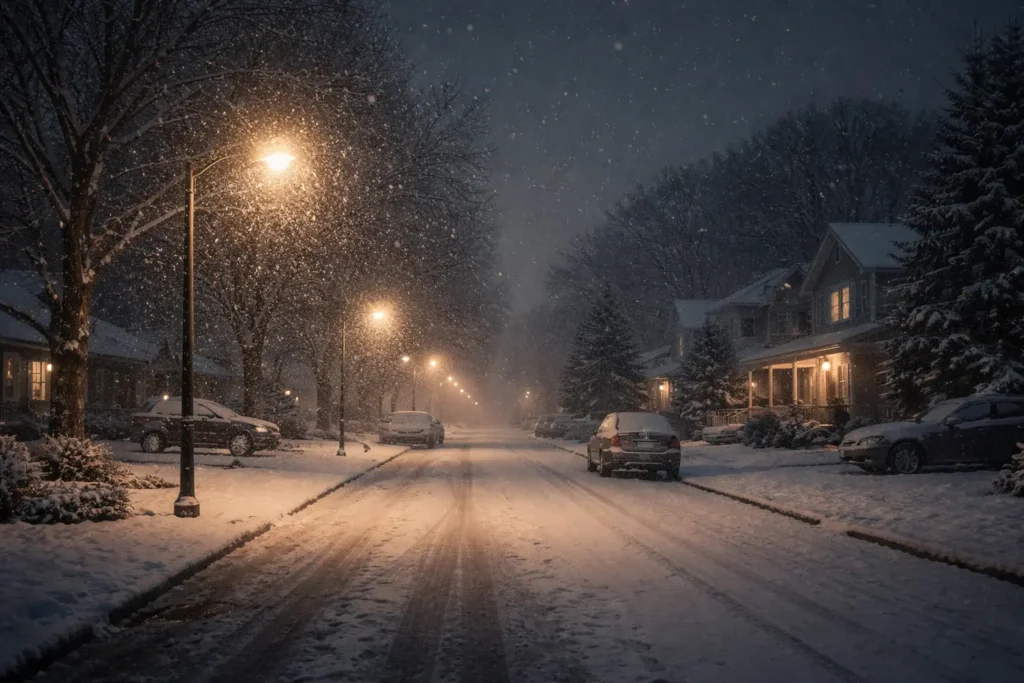
Are Experts Lying About Massive Snow Chaos Tonight
Headlines that say “massive snow chaos tonight” can feel alarming. Before assuming experts are lying or manipulating public fear, it helps to understand how forecasts are made and communicated.
How Weather Forecasts Work
Forecasts rely on models that simulate the atmosphere using current observations. Models use different methods and can produce different outcomes when conditions are uncertain.

Forecasters interpret model outputs, add local knowledge, and provide a probability-based outlook. That process includes unavoidable uncertainty, especially for fast-moving or complex systems.
Why “Massive Snow Chaos Tonight” Headlines Spread
Short, dramatic headlines simplify complex forecasts into a single message. That simplification can make the situation sound more certain than it is.
Media outlets often use urgent language to attract attention, while official forecasts focus on probabilities and ranges. This difference can create the impression that experts exaggerated the threat.
Reasons Forecasts Seem Exaggerated
- Model variability: Different models may disagree on storm track or intensity.
- Timing uncertainty: A few hours’ difference in arrival can change snowfall totals significantly.
- Local factors: Elevation, urban heat islands, and coastal effects can alter amounts across short distances.
- Communication style: Warnings may emphasize worst-case scenarios to prioritize safety.
How Some Warnings Aim to Reduce Risk

When officials emphasize the worst reasonable outcome, their goal is to encourage precaution. That can feel like fear control to some, but it often reflects a public safety approach designed to prevent harm.
That said, it’s important to keep agencies accountable for accuracy and clarity in their messaging.
Practical Steps to Evaluate Tonight’s Forecast
Rather than assuming dishonesty, use a few practical checks to assess the situation yourself. These steps help you decide how to act.
- Check multiple sources: Compare the national weather agency, regional office, and reputable private forecasts.
- Look at probability products: Snowfall probability maps and confidence intervals show uncertainty.
- Monitor model consensus: If several models agree, confidence is higher. If they diverge, expect updates.
- Follow official local guidance: Local emergency managers and transportation departments issue practical advisories.
How to Prepare Sensibly for Tonight’s Snow

Preparation should match credible risk, not sensational headlines. Use a calm, checklist approach to be ready.
- Home basics: Stock food, water, medications, and flashlights for 24–48 hours.
- Car readiness: Keep gas tank at least half full, have a charged phone, blankets, and an ice scraper.
- Travel decisions: Delay nonessential travel if forecast confidence is low but possible high impacts exist.
- Check on vulnerable people: Older neighbors and those with medical needs may need help preparing.
Example Checklist
- Phone charged, car battery checked
- Groceries for 2 days, pet food
- Emergency contact list and local alerts enabled
Short-term snowfall forecasts (0–24 hours) are often more accurate for timing than for exact amounts. A one-hour shift in a storm track can change snow totals from an inch to a foot in some areas.
Case Study: A Local Forecast That Shifted
In a recent regional event, model runs at midday projected a high-end snowfall for a metropolitan area. Officials issued a strong advisory to encourage preparation.
Later model updates shifted the storm track a little east, reducing totals for the city but increasing impacts in nearby rural counties. Communication that emphasized worst-case outcomes led some urban residents to feel the threat was overblown.
This example shows two points: forecasts evolve as more data arrives, and emphasizing worst-case scenarios can be a deliberate public safety choice rather than intentional fearmongering.
How to Talk About Claims Experts Are Lying
When you hear claims that experts are lying to control public fear, ask for evidence and context. Look for documented errors, retractions, or patterns of consistent false predictions before accepting such claims.
Healthy skepticism is useful, but so is recognizing the difference between cautious warnings and deliberate deception. Demand transparency: timelines of model updates and reasoned explanations help build trust.
Questions to Ask
- Which models supported the initial forecast and how did they change?
- Did local officials explain uncertainty and possible scenarios?
- Is there a documented error or correction from the forecasting agency?
Final Practical Advice
Stay informed from multiple authoritative sources and prepare proportionally to credible risks. Avoid spreading unverified accusations that experts are intentionally lying.
Focus on readiness: a reasonable kit, clear local plans, and a willingness to update your actions as forecasts are refined. That approach reduces harm whether a storm ends up being worse or milder than early headlines suggested.



