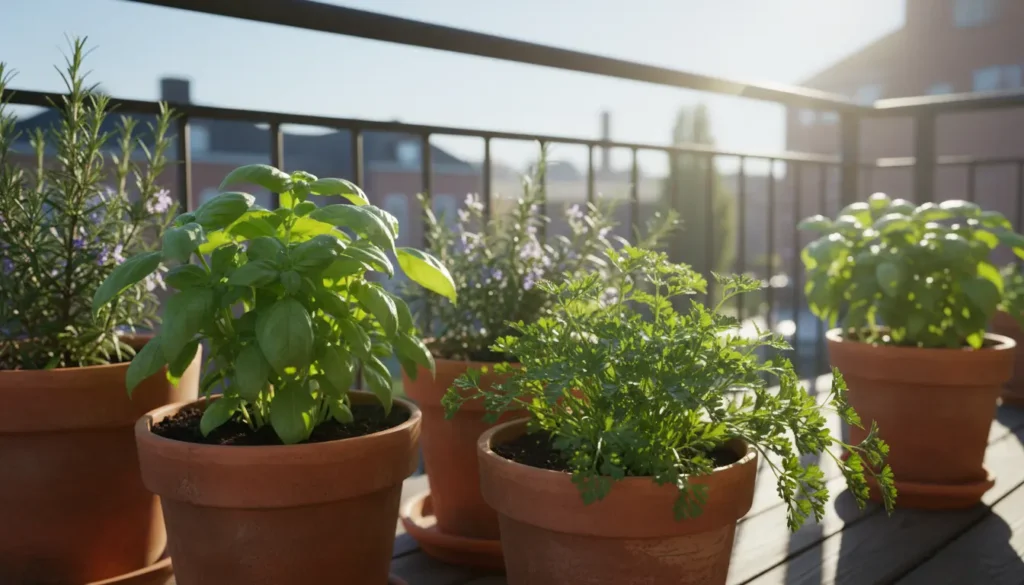
Starting a small herb garden is a practical way to add fresh flavors to meals and brighten a small space. This guide focuses on easy, actionable steps you can follow whether you have a balcony, patio, or a sunny windowsill.
Choosing a Location for a Small Herb Garden
Location affects light, temperature, and how often you will water. Select a spot with consistent sunlight and easy access for daily care.
Light and Temperature Needs for a Small Herb Garden
Most culinary herbs need 5–7 hours of direct sunlight per day. South- or west-facing windows are ideal for indoor setups.
In hot climates, provide afternoon shade to prevent leaf scorch. In cooler climates, choose the warmest available spot and consider a heat-absorbing surface like a stone ledge.
Containers and Soil for a Small Herb Garden
Choose containers with drainage holes and a volume that matches your herb’s root system. A 6–10 inch pot suits most herbs, while larger perennial herbs may need bigger pots.
Use a high-quality potting mix with good drainage. Avoid garden soil in containers because it compacts and impedes drainage.
- Use terracotta or plastic pots depending on weight and aesthetics.
- Add a layer of coarse grit or broken pottery at the bottom of deep pots for extra drainage.
- Mix in a slow-release organic fertilizer or compost at planting time.
Picking Herbs for a Small Herb Garden
Choose herbs that match your light conditions and cooking habits. Start with a few staples, then expand as you gain confidence.
Best Beginner Herbs for a Small Herb Garden
- Basil — quick-growing and great for sunny spots.
- Parsley — tolerates partial shade and is versatile.
- Rosemary — drought-tolerant and aromatic.
- Thyme — compact and good in small pots.
- Chives — reliable on windowsills and in light shade.
Pairing Herbs in a Small Herb Garden
Group herbs with similar water and light needs in the same container. For example, plant basil and chives together, but keep rosemary separate because it prefers drier soil.
Consider staggered maturity: pair fast growers with slower growers to maintain a full-looking garden over time.
Planting and Care for a Small Herb Garden
Planting time depends on whether you use seeds or starts. Seedlings offer a head start and reduce early-stage loss.
Planting Steps for a Small Herb Garden
- Fill the container with potting mix, leaving 1–2 inches at the top.
- Plant seedlings at the same depth as they were in their nursery pots.
- Water thoroughly after planting to settle the soil.
Watering and Feeding Your Small Herb Garden
Water when the top inch of soil feels dry. Most herbs prefer consistent moisture but not soggy conditions.
Feed with a balanced liquid fertilizer every 4–6 weeks during the growing season. Use diluted organic fertilizer for milder, consistent growth.
Pruning and Harvesting in a Small Herb Garden
Regular harvesting encourages bushier growth. Pinch or cut stems above a leaf node to promote new branches.
Remove flowers from culinary herbs like basil to keep leaves productive. Allow a few flowers on herbs used for garnish or tea if you want seeds.
Troubleshooting and Pests in a Small Herb Garden
Small gardens can face common issues like overwatering, nutrient deficiency, and pests. Early detection keeps problems manageable.
Common Problems and Simple Fixes
- Yellow leaves — often from overwatering. Let soil dry slightly and reduce watering frequency.
- Leggy growth — too little light. Move pots to a sunnier spot or add supplemental light.
- Aphids or whiteflies — rinse foliage with water and use insecticidal soap if needed.
- Root-bound plants — repot into a larger container or trim roots and refresh soil.
Many herbs release stronger flavor when harvested mid-morning after the dew has dried. Harvesting frequently can increase leaf production.
Small Real-World Example: A Balcony Herb Garden Case Study
Maria started a small herb garden on a narrow city balcony using three 8-inch pots. She planted basil, parsley, and rosemary in early spring from seedlings.
She placed the pots on a south-facing railing shelf and watered twice weekly, adjusting in hot weather. By six weeks she had enough basil to make pesto and parsley for weekly salads.
Her total cost was under $50 for pots, soil, and seedlings. Minimal maintenance and regular harvesting kept the herbs productive through summer.
Action Checklist to Start Your Small Herb Garden
- Choose a sunny location and suitable containers with drainage.
- Pick 3–5 beginner herbs that match your cooking style.
- Use quality potting mix and plant at proper depth.
- Water when the top inch of soil is dry and fertilize monthly.
- Prune regularly and watch for pests early.
With a clear spot, a few good containers, and the right starter herbs, you can have a thriving small herb garden in weeks. Follow the steps above and adapt care based on your light and climate for the best results.