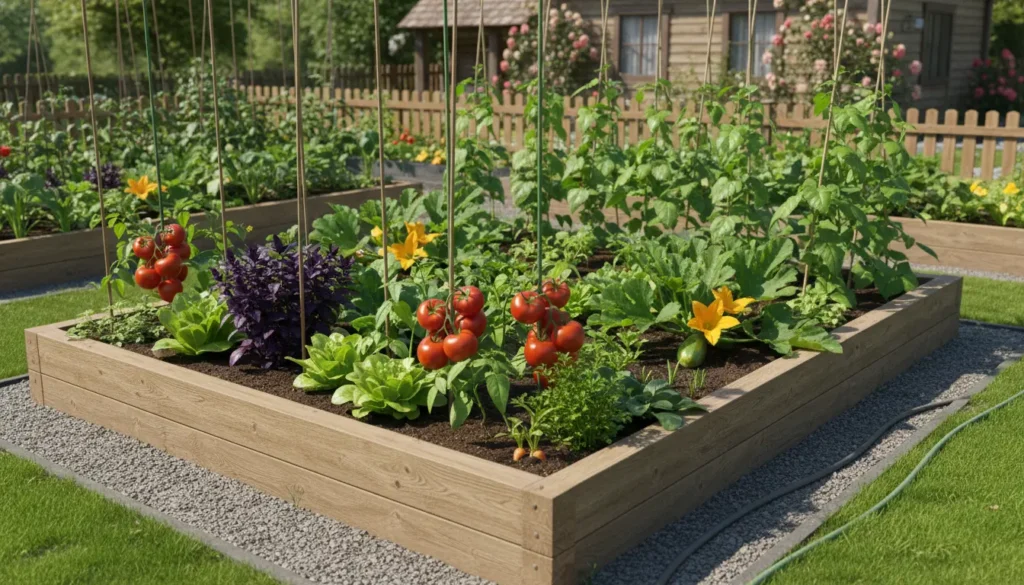
Why Start a Vegetable Garden
Growing your own vegetables reduces grocery costs and increases access to fresh produce. A vegetable garden also improves well being and connects you to seasonal food cycles.
This guide gives clear, actionable steps to start a vegetable garden with minimal tools and realistic expectations.
Choose the Right Site to Start a Vegetable Garden
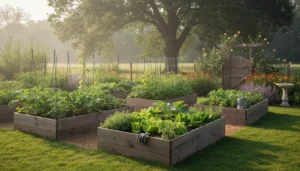
Select a spot that receives at least 6 hours of direct sunlight daily for most vegetables. Good light is the single most important factor for success.
Consider proximity to water and convenience. A garden close to your kitchen increases the chance you will maintain it.
Site Checklist
- Sunlight: 6+ hours daily
- Water access within 50 feet
- Good drainage; avoid low soggy areas
- Protected from strong winds if possible
Decide Between In-Ground, Raised Beds, or Containers
Soil quality and space often determine the method. Raised beds and containers are ideal for beginners and urban gardeners.
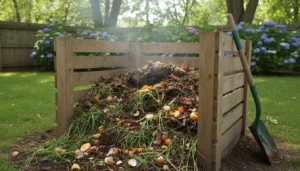
Raised beds warm earlier in spring and offer better control of soil composition.
When to Choose Containers
- Limited space like balconies or patios
- Want portable crops or temporary setups
- Need to avoid poor or contaminated soil
Prepare Soil and Amend When You Start a Vegetable Garden
Healthy soil is the foundation of a productive garden. Test soil if possible to check pH and nutrient levels.
Amend heavy clay with compost and coarse sand. Add compost to raised beds and containers to increase fertility and drainage.
Simple Soil Mix for Raised Beds and Containers
- 40% topsoil
- 40% compost
- 20% coarse sand or perlite for drainage
Pick Easy Vegetables for Your First Season
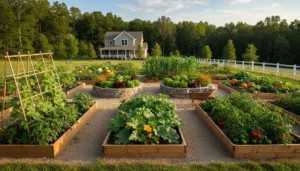
Begin with fast, forgiving crops to build confidence. These require less precise care and offer quick rewards.
- Lettuce and salad greens (cut-and-come-again)
- Radishes (very fast, 3–5 weeks)
- Green beans (bush varieties)
- Tomatoes (determinate types are simpler)
- Herbs like basil, parsley, and chives
Planting Schedule and Seed vs. Seedlings
Check your local last frost date and plan accordingly. Many seeds can be sown directly; others perform better started indoors and transplanted.
Use this simple rule: leafy crops tolerate cooler weather; warm-season crops like tomatoes and peppers need warm soil.
Quick Planting Guide
- Sow lettuce and peas early in spring
- Direct sow radishes and carrots when the soil can be worked
- Transplant tomatoes and peppers after danger of frost passes
Watering and Mulching Tips
Consistent moisture is essential. Water deeply once or twice a week rather than light daily sprinkling to encourage strong roots.
Apply 2–3 inches of organic mulch to retain moisture, suppress weeds, and moderate soil temperature.
Watering Best Practices
- Water at the base of plants to reduce disease
- Use drip irrigation or soaker hoses for efficiency
- Morning watering reduces evaporation and fungal risk
Pest and Disease Management When You Start a Vegetable Garden
Monitor regularly for pests and early signs of disease. Learn to identify common issues: aphids, slugs, blight, and powdery mildew.
Use integrated pest management: cultural controls, physical barriers, and as a last resort, targeted organic treatments.
Low-Impact Pest Controls
- Row covers to protect seedlings from insects
- Hand-pick caterpillars and slugs
- Encourage beneficial insects with flowering herbs and native plants
Harvesting and Extending the Season
Harvest regularly to encourage continued production. Pick vegetables when they are young and tender for best flavor.
Use succession planting and cold frames to extend the season before spring and after fall.
Case Study Example
Real-World Example: Sarah, an apartment dweller, started a 4×8 raised bed on her small balcony. She filled the bed with a homemade mix of compost and topsoil and planted lettuce, bush beans, and cherry tomatoes.
In her first season she harvested weekly salads for three months and enough tomatoes for canning. Her focused plant selection and simple drip irrigation made maintenance easy.
Most vegetables need only 1 to 1.5 inches of water per week. Mulch can reduce evaporation by up to 70 percent.
Common Mistakes to Avoid When You Start a Vegetable Garden
- Planting too close together — provide proper spacing for airflow
- Overwatering or shallow watering that weakens roots
- Starting with too many crops — focus on a few to learn routines
Final Steps and Ongoing Care
Keep a simple journal with planting dates, varieties, and results. Small notes help you learn what works in your microclimate.
Plan a rotation each year to reduce disease pressure and maintain soil health. With a few seasons of practice you will refine your plant list and timing.
Starting a vegetable garden is a practical way to grow food, learn seasonal rhythms, and improve your diet. Begin small, observe closely, and expand as you gain confidence.