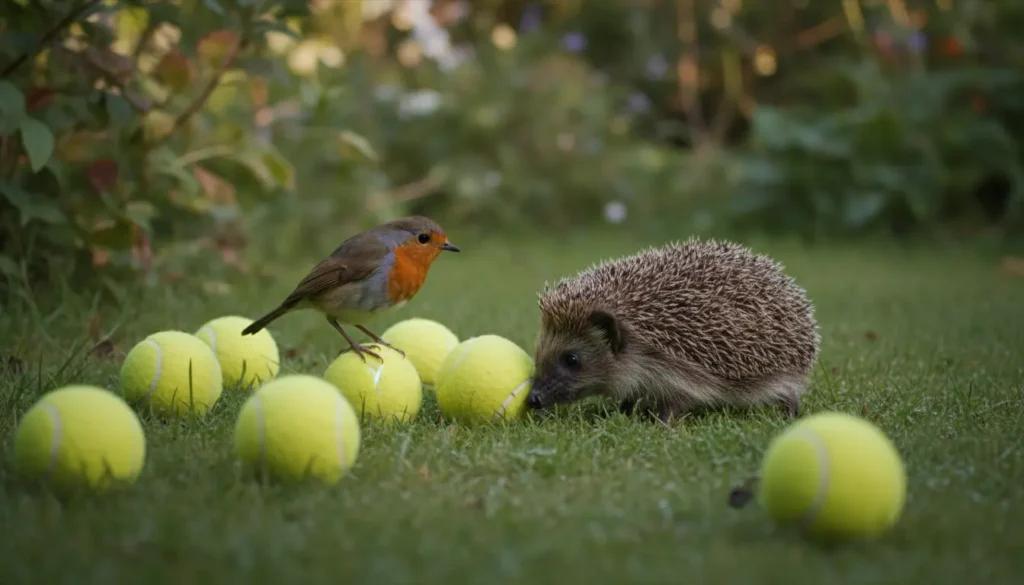
Placing Tennis Balls in Your Yard: How this simple idea helps birds and hedgehogs
Reusing everyday items can be an easy way to make your garden more wildlife friendly. Tennis balls are cheap, durable, and widely available. With a few simple adjustments, they can support birds and hedgehogs without complex building projects.
Why use tennis balls in a wildlife-friendly yard
Tennis balls are lightweight, weather-resistant, and easy to attach to structures. They are useful as markers, low-cost covers, and as components in small DIY devices that protect nests, entrances, and feeding stations.

These uses are practical rather than magical. The main value is that tennis balls help people make small changes quickly and safely for local wildlife.
Benefits for birds and hedgehogs
- Marking safe pathways and access points so hedgehogs can move freely between gardens.
- Creating simple covers or baffles to keep rain out of nest boxes and feeding points.
- Reducing sharp edges or hard contact surfaces where hedgehogs nest or walk at night.
- Providing visible cues so humans avoid blocking hedgehog holes or disturbing nests.
Practical ways to use tennis balls in your yard for birds and hedgehogs
Below are safe, low-effort projects you can try. Each method is designed to be reversible and cause no harm to animals.
1. Hedgehog highway markers
Mark gaps and passages in fences with a bright tennis ball tied nearby. Use string or a small stake to hang a ball above the hole so it is visible from both sides.
This helps household members and gardeners notice the passage and avoid blocking it when installing fences or gates.
2. Simple entrance awning for hedgehog boxes
Cut a tennis ball in half and attach the rounded half above the entrance of a hedgehog box. The curve forms a tiny awning that sheds rain and reduces drafts.
Important: the tennis ball is not bedding. Use natural, breathable materials like dry leaves or hay for nest material instead.
3. Pole cap for bird feeders or posts

Push a clean tennis ball onto the top of a wooden post or feeder pole. The smooth, round cap prevents pigeons or squirrels from perching comfortably on top and can reduce water pooling on flat posts.
Test stability and make sure the ball is firmly fixed so it cannot fall into an area where a small animal might chew it.
4. Quick padding for edges and low walls
Split a tennis ball and use the halves to cushion sharp edges on low garden furniture or raised beds. This reduces risk of injury to hedgehogs when they squeeze through tight gaps at night.
How to make each tennis ball project safely
- Clean balls before use. Wash with warm water and a mild soap and rinse well.
- Avoid using balls treated with chemicals, glitter, or paint that could flake off.
- Do not use tennis balls as bedding. They are not breathable and can cause overheating or choking if chewed.
- Secure all attachments. Loose pieces are hazards—fasten balls with strong string, zip ties, or staples into places animals cannot reach.
Materials and quick tools list
- Old tennis balls (cleaned)
- Sharp scissors or a craft knife for controlled cuts
- Strong string or zip ties
- Staples or small nails for fixed fittings (use carefully)
- Natural nesting materials like dry leaves, straw, or untreated hay
Hedgehogs can travel up to one mile a night when foraging. Small garden passages left open make a big difference to their movement between feeding areas.
Case study: a small suburban garden test
A household in a suburban neighborhood marked two garden fence gaps with tennis ball markers and added an awning made from a hung tennis ball over a hedgehog box entrance. They also capped a feeder post with a ball to reduce spoilage.
Over three months the household observed more regular hedgehog visits and cleaner feeding areas for birds. Neighbors reported avoiding blocking the marked gaps during a fence repair, preserving local hedgehog movement routes.
This is anecdotal, but it shows how low-cost, visible changes can encourage safer behavior and create small habitat improvements.
When not to use tennis balls
Avoid using tennis balls in places where animals could chew or ingest pieces. If you see wear or damage, remove the ball immediately.
If you are unsure whether a modification is safe, consult a local wildlife group or hedgehog rescue for advice before installing it.
Final checklist before you start
- Have you cleaned the tennis balls and tools?
- Are all attachments secure and out of reach of chewing animals?
- Is natural material used for bedding instead of balls?
- Have you told family and neighbors about any marked hedgehog passages?
Used carefully, tennis balls are a surprising, low-cost way to help birds and hedgehogs in small but meaningful ways. The key is to keep changes reversible, visible, and safe for animals.