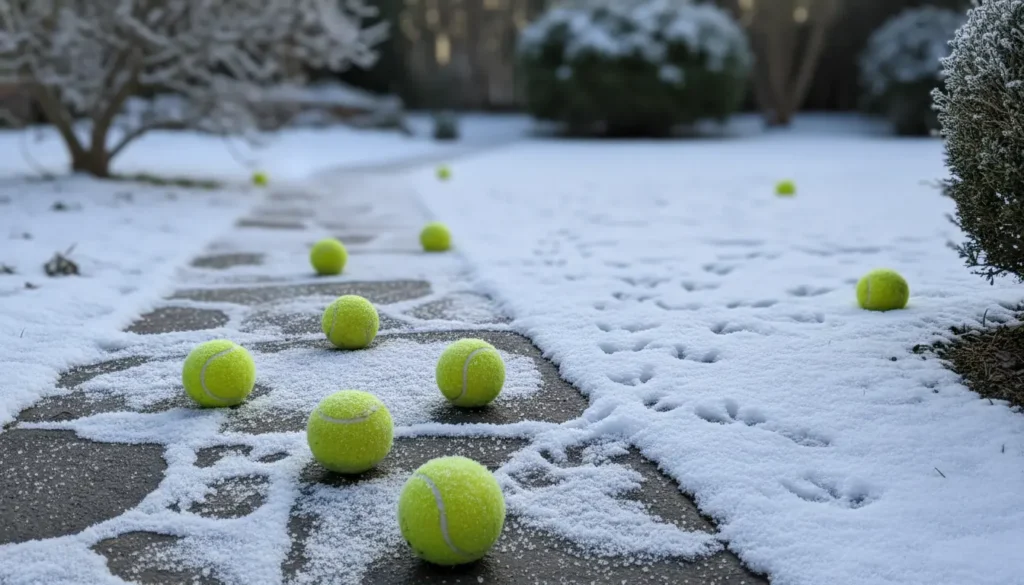
How Tennis Balls Prevent Slips and Falls for Birds and Hedgehogs in Snow
Snow and ice make garden surfaces slick for small animals. Birds can miss footing on feeder perches and hedgehogs can slip on ramps or garden paths.
Using tennis balls as simple traction aids is an inexpensive, low-tech method to reduce slips and falls. This article explains why they work and how to use them safely and effectively.
Why tennis balls help birds and hedgehogs in snow

Tennis balls have a textured, rubbery surface that increases friction. That texture helps claws and tiny feet find grip where smooth wood or metal becomes icy.
They are also lightweight, weather-resistant, and easy to attach or place. These features make tennis balls a practical traction material in cold conditions.
Key benefits of using tennis balls for winter traction
- Improved grip on feeders, ramps, and steps.
- Low cost and widely available, often reusable.
- Simple to install without heavy tools.
- Non-toxic natural rubber in most modern balls (check labels).
Where to use tennis balls in the garden
Placement matters. Consider common animal routes and problem spots:
- Bird feeder perches and tray edges.
- Hedgehog house entrances and access ramps.
- Garden steps, short wooden bridges, and narrow paths where animals cross.
- Under flat stones or logs to create a rough stepping surface.
How to place tennis balls for traction

Follow these practical steps to improve safety for wildlife without creating hazards.
- Choose balls in good condition with intact rubber and no loose felt.
- Clean muddy or oily balls with mild soap and water to remove residues.
- Decide whether to use whole balls, halves, or flattened sections based on the surface.
- Secure firmly so they do not roll free and become litter or ingestion risk.
Attachment methods that work
Use simple, safe fixes tailored to the surface and animal. Avoid adhesives that emit strong fumes or small loose parts.
- Zip ties threaded through a shallow hole or slit can hold a ball to a wooden perch.
- Drill a small pilot hole and use a screw with a wide washer through the ball for a permanent fit on wood.
- Cut a ball in half and glue the open side to a flat surface with outdoor-safe non-toxic adhesive, making a stable cup.
- Lay loose balls under a mat or beneath a platform so they act as a textured spacer without being exposed.
Safety considerations for wildlife
Wildlife safety must guide every step. Avoid creating small parts that animals could chew or swallow.
- Do not use balls with torn felt or exposed inner rubber pieces.
- Check periodically to ensure attachments are secure and free of sharp edges.
- Keep any fasteners out of reach, and avoid paint or sealants that could be toxic.
Maintenance in winter

Inspect tennis-ball traction points weekly during freeze-thaw cycles. Snow and ice can shift fasteners or pack into crevices.
Remove compacted ice and replace balls that show excessive wear. Clean regularly to prevent mold and odors.
Materials and tools list
Most setups use simple items you likely have at home.
- Tennis balls (new or undamaged used)
- Zip ties, outdoor screws, or non-toxic adhesive
- Hand drill or utility knife (use safely)
- Soap, water, and a cloth for cleaning
Small case study: A community garden test
In a small town garden, volunteers added tennis-ball traction to three feeder posts and one hedgehog ramp during a two-week snow period.
After installation, volunteers recorded fewer bird slips and three safe hedgehog passages across the ramp. The team reported the improvements were immediate and required little maintenance.
Practical examples of use
Example 1: Feeders — attach half balls under the ends of a wooden tray to give birds a grippy edge when snow accumulates.
Example 2: Hedgehog ramp — secure whole balls beneath the ramp treads so each step has a textured surface that resists compacted ice.
When tennis balls are not the right solution
They are not a universal fix. On very steep or constantly iced surfaces, grit, sand, or rough timber may be safer and more durable.
Always evaluate each spot and combine methods—tennis balls plus a coarse mat can work better than either alone.
Final checklist before you start
- Inspect balls for damage and clean them.
- Choose an attachment method with wildlife safety in mind.
- Place balls where animals naturally travel and test stability.
- Monitor and maintain during freeze-thaw cycles.
Used thoughtfully, tennis balls are an affordable, low-effort way to reduce slips and falls for birds and hedgehogs in snowy gardens. They improve traction, are simple to install, and can make a real difference in cold weather when animals need reliable footing.



