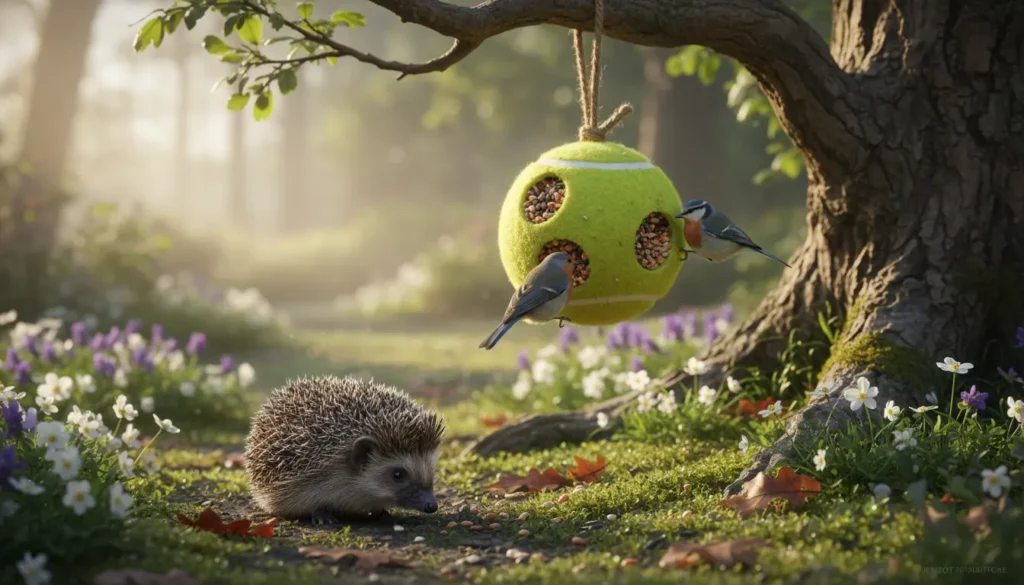
Small, Cheap, Useful: Why Tennis Balls Work in the Garden
Tennis balls are soft, buoyant, and highly visible. These traits make them a practical, low-cost tool to reduce common winter risks for small animals in gardens.
With a little care, old tennis balls can be repurposed to protect birds from icy pans and hedgehogs from getting trapped in drains or holes. The techniques below are simple and require no specialist tools.
Winter hazards for birds and hedgehogs

Winter brings two overlapping problems in gardens: cold and hidden hazards. Frozen water, narrow drains, and vertical gaps can trap small animals.
Birds also need accessible food sources in bad weather, and hedgehogs benefit from safe routes and sheltered entry points. Addressing these issues early reduces injuries and mortality.
How tennis balls help birds in winter
Tennis balls can be transformed into quick bird-feeding stations and used to keep water surfaces safer for birds. They are bright and durable, so they catch attention and withstand weather.
Make a simple tennis ball bird feeder
What you need: an old tennis ball, a pair of scissors or a sharp craft knife, kitchen twine, and suet or seed mix. Always wear gloves and work slowly when cutting.
- Cut a small X into the ball, about 3–4 cm wide.
- Squeeze gently to open the slit and push in a small ball of suet mixed with seeds.
- Thread twine through the ball and hang it from a low branch, away from strong wind and predators.
This gives birds an energy-rich treat and a foraging opportunity with minimal expense. Check and replace the suet regularly to avoid mould.
Use floating tennis balls to reduce ice risks
Placing several clean tennis balls in a shallow pond or water feature can help keep a small area of the surface moving, especially on aerators or around inlets. The movement reduces complete freezing in that spot and gives waterfowl a place to land.

Ensure balls do not block filters or pumps. Remove balls for cleaning and inspection every few weeks.
How tennis balls help hedgehogs in winter
Hedgehogs are small, inquisitive, and often get trapped in narrow openings or steep drains. Tennis balls can be used to mark, block, or cushion problem spots safely.
Block or cushion dangerous holes
For small vertical pipe openings or shallow holes where a hedgehog might injure itself, wedge a clean tennis ball gently into the opening. Do not force it into a hole that requires pressure or causes deformation.
If part of the ball protrudes, cut a short length of string through it so you can remove the plug quickly for maintenance. This method is temporary and best for shallow risks only.
Mark hazards and create safer routes
Bright tennis balls placed on stakes or tied to low posts act as visible markers to help you and visitors spot holes, ponds, or steep drops. You can also use them to create a low boundary that directs hedgehogs to safer gaps in fences.
Safety rules when using tennis balls for wildlife
- Use clean balls: wash well to remove dirt, chemicals, and oil before placing near animals.
- Avoid small pieces: never leave shredded balls where animals could ingest fragments.
- Check regularly: inspect feeders, plugs, and floats weekly for wear or mould.
- Do not trap or seal animals in: any plug must allow ventilation and be quickly removable.
- Use only in supervised spots: avoid placing where pets or children might tear items apart.
Old tennis balls can last outdoors through a single winter season without breaking down. Cut or altered balls deteriorate faster, so replace them yearly to avoid loose fragments.
Step-by-step example: DIY tennis ball suet feeder
This is a quick, repeatable project you can finish in 15 minutes using recycled materials.
- Clean one tennis ball with soapy water and dry it thoroughly.
- Cut an X-shaped slit about 3–4 cm across on one side of the ball.
- Make suet by mixing melted beef fat with wild bird seed; let it set slightly.
- Push a spoonful of the suet mix into the slit, then thread twine through the ball and tie securely.
- Hang 1–2 metres above ground, where you can watch from a window but cats and squirrels cannot reach easily.
Replace suet if it becomes wet or shows signs of spoilage. Use beef-free suet if you prefer plant-based ingredients.
Short case study: A community test in a suburban garden
A suburban community garden trialled tennis ball feeders and drain plugs over a six-week winter period. Volunteers installed 12 feeders and used tennis ball markers around three known drain risks.
Observations showed an increase in small bird visits to feeders during cold snaps, and no hedgehog entrapment incidents were reported near marked drains for the duration of the trial. Regular checks and quick maintenance were credited for the success.
Practical tips and troubleshooting
- If birds ignore a feeder, try moving it to a quieter spot or change the seed mix.
- If a tennis ball plug is weathered, replace it promptly to avoid creating choking hazards.
- Use several small feeders rather than one large one to reduce crowding and competition.
Final thoughts on this garden hack
Repurposing tennis balls is an inexpensive, practical way to reduce winter risks for garden wildlife. The methods shown are low-tech and suitable for most gardens.
Always prioritise animal safety: clean materials, regular checks, and simple removal options make the approach both humane and effective.