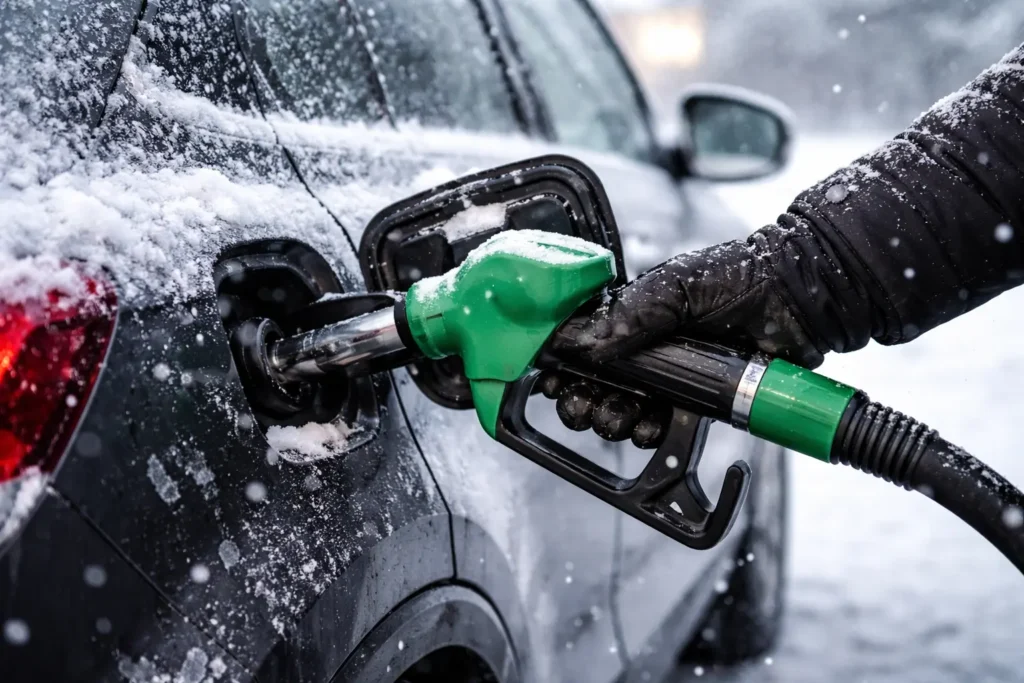
Cold weather can create fuel delivery problems that stop a vehicle from starting. Auto technicians often recommend keeping the gas tank above half to reduce the risk of fuel line freeze. This article explains how that works and gives practical steps to avoid winter fuel issues.
Why fuel line freeze happens
Fuel line freeze occurs when water in the fuel system freezes in the lines or at the filter and blocks fuel flow to the engine. Even small amounts of water can form ice that restricts or stops fuel delivery.

Water gets into the fuel system primarily from condensation inside the gas tank. Temperature changes cause moisture in the air above the fuel to condense on the tank walls and mix with the gasoline.
Role of condensation and water in the gas tank
A partly empty tank has more airspace. That air contains water vapor. When the temperature drops overnight, the vapor condenses and forms liquid water that settles at the bottom of the tank.
Since water is heavier than gasoline, it collects near the fuel pickup. At freezing temperatures, that pooled water can freeze and block the pickup or filter, causing an engine to stall or fail to start.
How keeping the gas tank above half prevents fuel line freeze

Keeping the tank above half reduces the airspace inside the tank. Less airspace means less water vapor that can condense into liquid water. With less water present, the chance of ice forming in the fuel line is lower.
There are three practical mechanisms technicians point to when recommending a half-full tank:
- Reduced headspace: Less empty space above the fuel means less moist air to condense.
- Submerged pickup: With more fuel, the fuel pickup and pump stay submerged, reducing the likelihood that water at the tank bottom will be drawn into the lines.
- Thermal mass: A fuller tank holds temperature more steadily, so fuel and any small amount of water are less likely to freeze quickly.
Why half a tank and not completely full
Half a tank is a practical rule of thumb. It balances cost and convenience while still significantly reducing airspace. Filling completely is fine, but half is an easy minimum to maintain for most drivers.

In very cold regions, technicians sometimes recommend keeping the tank two-thirds to three-quarters full on the coldest days.
Practical tips to prevent fuel line freeze
Follow these technician-approved steps to minimize the risk of freeze-related fuel problems in winter.
- Keep the tank above half during cold snaps, and higher if temperatures are expected well below freezing.
- Refuel before long periods of inactivity, such as overnight trips or storage, to reduce condensation risk.
- Use fuel additives recommended for your climate if water contamination is a known problem. Only use products approved for your engine type.
- Park in a garage or sheltered area when possible to reduce temperature swings that cause condensation.
- Regularly inspect and replace the fuel filter according to your vehicle’s maintenance schedule to prevent blockages from water or debris.
When additives help
Alcohol-based fuel dryer additives and water-removal products can help in cases where moisture is already present. These products are designed to bind small amounts of water and allow them to pass harmlessly through the fuel system.
Always follow product instructions and use additives compatible with your vehicle. If in doubt, consult a qualified technician.
Water settles at the bottom of a gas tank because it is heavier than gasoline. Even when you can’t see it, a thin layer of water can form after repeated heating and cooling cycles.
When you might still see fuel line freeze
Keeping the tank above half greatly reduces risk but does not guarantee zero problems. If the tank already contains significant water, ice can still form at the pickup or in the filter.
Old or damaged fuel tanks, poor seals, and frequent short trips (which don’t clear condensation) increase the likelihood of problems. In those cases, inspection and repair are needed.
Signs of fuel line freeze
- Engine cranks but does not start, especially in the morning.
- Stalling after a short drive as temperatures drop.
- Intermittent loss of power that returns as the vehicle warms up.
Real-world example
A municipal worker in Minnesota reported a pickup truck that failed to start on repeated subzero mornings. The local mechanic found a thin layer of ice in the fuel filter and a tank that was rarely more than a quarter full.
After advising the driver to keep the tank above half and replacing the fuel filter, the starting problems disappeared. The mechanic also recommended parking in a sheltered area when possible and adding a small fuel dryer additive during the coldest months.
Steps to keep your gas tank above half and other winter maintenance
Make the half-tank habit part of your winter routine. Combine it with simple maintenance to further reduce risk.
- Refuel whenever you drop near half a tank during cold weather.
- Use recommended fuel additives if you suspect moisture contamination.
- Replace fuel filters on schedule and inspect fuel lines for damage.
- Store the vehicle in a garage or under cover when possible to reduce temperature swings.
These steps are low-cost and effective. For drivers in cold climates, they prevent frustration and can avoid roadside calls in freezing conditions.
Keeping your gas tank above half is a simple, practical action that reduces condensation and the chance of fuel line freeze. Pair this with routine maintenance and a few winter habits to keep your vehicle starting reliably when temperatures drop.



