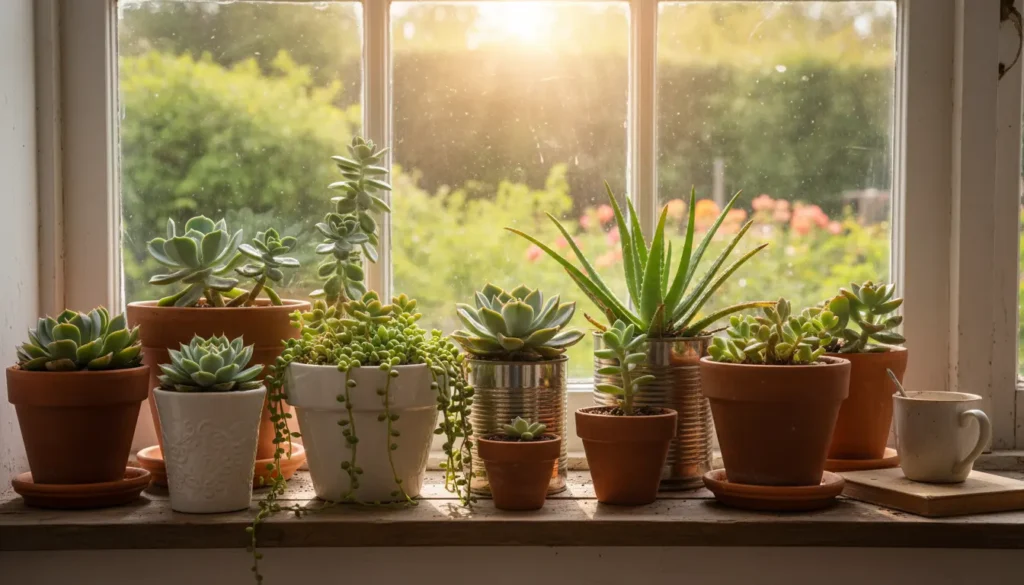
Succulent care looks simple but effective routines make the difference between thriving plants and slow decline. This guide gives clear, practical steps you can apply at home. Follow the core principles below to keep succulents healthy with minimal fuss.
Basic Succulent Care Principles
Succulent care centers on three main factors: light, water, and soil. Balance these and most species will reward you with steady growth and attractive forms.

Pay attention to how each plant responds and adjust routines rather than following strict schedules. Observation is one of the best tools for succulent care.
Light Requirements for Succulent Care
Most succulents prefer bright, indirect light for at least six hours per day. A south- or east-facing window is often ideal. Avoid prolonged exposure to scorching midday sun through glass, which can burn leaves.
If natural light is limited, use a full-spectrum LED grow light placed 12–18 inches above plants for 10–12 hours daily. Rotate pots weekly to encourage even growth.
Watering Guidelines for Succulent Care
Succulents store water and prefer a soak-and-dry method. Water thoroughly until it drains from the pot bottom, then allow the soil to dry before watering again. Overwatering is the most common cause of decline.
- Check soil depth with a finger or moisture meter; water when the top 1–2 inches are dry.
- Reduce watering in cooler months—many succulents enter a rest period and need less water.
- Avoid letting plants sit in saucers of water; empty trays after drainage.
Soil and Pot Choices for Succulent Care
Use a well-draining soil mix formulated for cacti and succulents or mix your own with potting soil, coarse sand, and perlite. Drainage prevents root rot and keeps oxygen available to roots.
Choose pots with drainage holes. Terra cotta helps wick moisture and can reduce overwatering risks, but any breathable container with drainage works.
Feeding and Repotting in Succulent Care

Succulents need minimal fertilizer. Feed lightly during active growth (spring and summer) with a balanced, diluted houseplant fertilizer every 4–6 weeks.
Repot immature plants every 1–2 years to refresh soil and provide room for root growth. Mature plants may only need repotting every 2–3 years or when they become root bound.
How to Repot for Better Succulent Care
Gently loosen old soil, trim dead roots, and place the plant in slightly larger pot with fresh mix. Allow a few days of shade after repotting to reduce transplant shock.
Common Problems and Troubleshooting for Succulent Care
Recognize common issues early. Yellowing, mushy stems, and dropping leaves often indicate overwatering. Leggy growth and pale colors suggest insufficient light.
Treat pests like mealybugs by removing affected parts and applying rubbing alcohol with a cotton swab. For widespread infestations, use insecticidal soap following product instructions.
Signs and Fixes
- Yellow, soft leaves: Cut high-moisture schedule, improve drainage, and remove rotten roots.
- Stretching (etiolation): Move plant to brighter location or add a grow light.
- Brown sunburn spots: Shift to gentler light or provide afternoon shade.
Many succulents can be propagated easily from leaf or stem cuttings. Roots often form in 2–6 weeks when cuttings are allowed to dry and callus before planting.
Seasonal Care Tips for Succulent Care
Adjust care with seasonal changes. In spring and summer, increase light and watering as growth resumes. In fall and winter, reduce water and avoid fertilizing.
Monitor indoor heating and humidity; dry winter air can dry out topsoil faster, so check moisture rather than following a calendar.
Small Real-World Case Study
A beginner named Maria rescued a struggling echeveria from a big-box store with soft leaves and compacted soil. She repotted it in a gritty mix, moved it to a bright east window, and adopted a soak-and-dry watering routine.
Within three months Maria saw firm leaves, new offsets, and stronger color. Her key changes were better drainage, correct light, and reduced watering frequency.
Practical Checklist for Succulent Care
- Place in bright, indirect light (6+ hours daily).
- Use well-draining soil and pots with drainage holes.
- Water thoroughly, then wait for the top 1–2 inches to dry.
- Fertilize lightly during growth months only.
- Repot every 1–3 years depending on growth.
- Inspect regularly for pests and signs of overwatering.
Succulent care is flexible and forgiving when you focus on core needs: light, drainage, and cautious watering. With simple observation and small adjustments, beginners can quickly develop confident routines. Apply the checklist above and experiment with one new technique at a time to see what works for your space and plants.